A Comprehensive Guide to Upper GI Endoscopy in India: Procedure, Preparation, and Recovery for International Patients – 2026
When persistent digestive discomfort becomes a concern, an Upper GI Endoscopy offers a clear path to diagnosis and treatment. This vital procedure allows medical professionals to examine the upper part of your digestive system with precision, identifying issues that might otherwise remain hidden. For international patients seeking world-class medical care, India has emerged as a leading destination, combining highly skilled gastroenterologists with state-of-the-art facilities. Patients benefit from significant cost savings without compromising on quality, making India an attractive choice for essential medical interventions and a journey towards better health.
What is Upper GI Endoscopy?
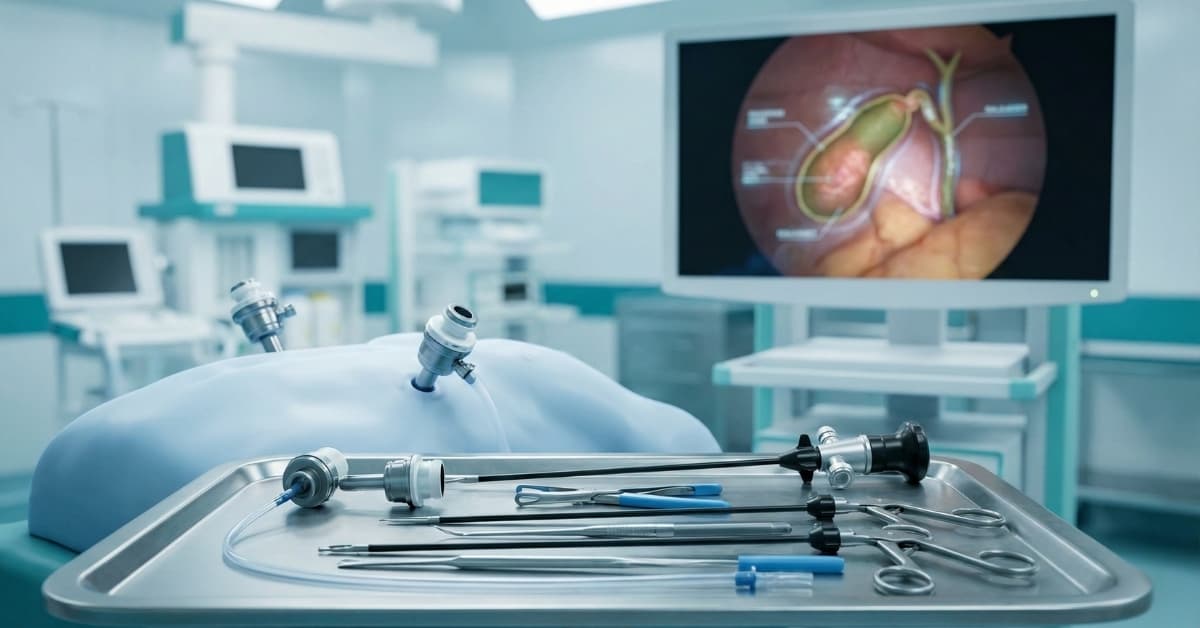
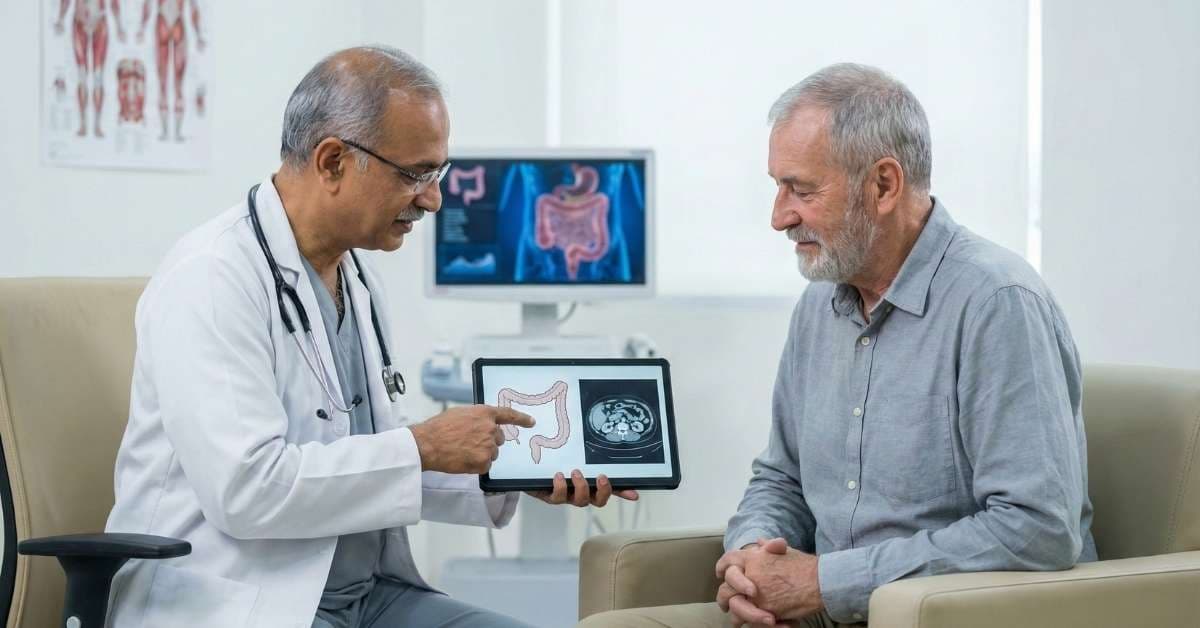
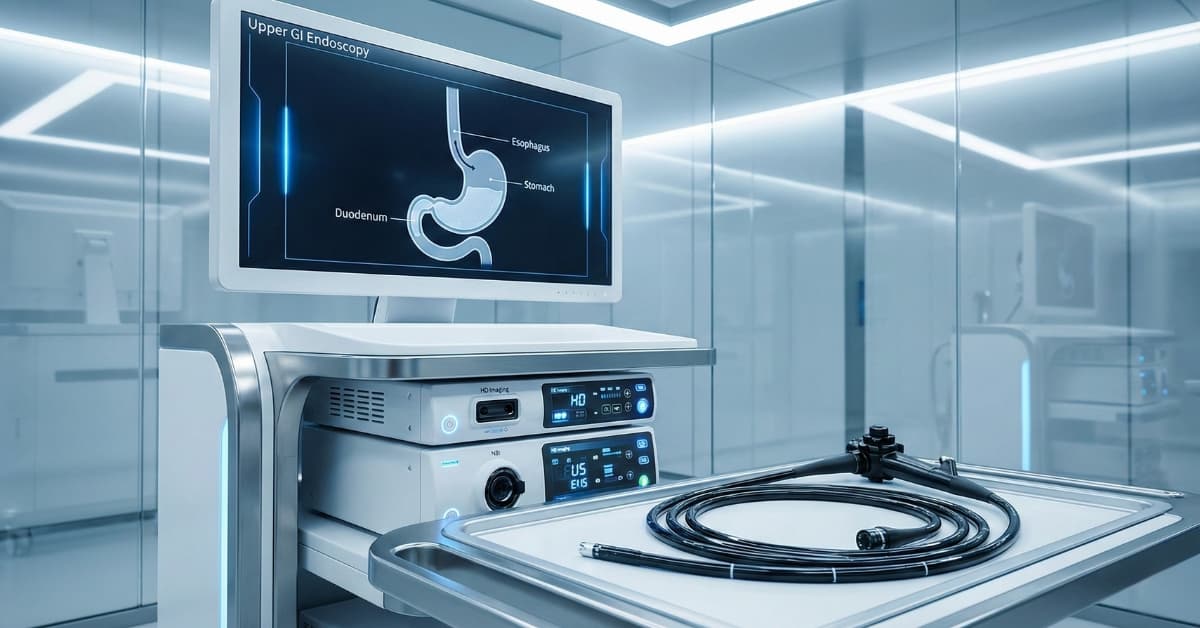
An Upper Gastrointestinal (GI) Endoscopy, also known as an esophagogastroduodenoscopy (EGD), is a non-surgical procedure used to examine the lining of the upper part of your digestive system. This includes the esophagus (the tube connecting your mouth to your stomach), the stomach, and the duodenum (the first part of your small intestine). During the procedure, a thin, flexible tube called an endoscope, equipped with a light and a tiny camera, is gently guided through your mouth and down into your digestive tract. This allows your doctor to visually inspect the internal organs for any abnormalities, such as inflammation, ulcers, polyps, or bleeding. Beyond just diagnosis, an endoscopy can also be therapeutic, enabling the doctor to take tissue samples (biopsies), remove polyps, or treat certain conditions directly during the procedure. It's a remarkably effective tool for understanding and addressing a wide range of digestive issues, offering clarity and a path to healing.
Indications for Upper GI Endoscopy
An Upper GI Endoscopy is recommended for a variety of symptoms and conditions that affect the upper digestive tract. It provides a direct and detailed view, which is often crucial for accurate diagnosis and effective treatment planning. Your doctor might suggest an endoscopy if you experience any of the following:
Preparation for Your Upper GI Endoscopy
Proper preparation is key to ensuring a successful and clear Upper GI Endoscopy. Your medical team will provide detailed instructions, but here are the general steps international patients should be aware of:
The Upper GI Endoscopy Procedure: What to Expect
Understanding what happens during an Upper GI Endoscopy can help alleviate any apprehension. The procedure is generally straightforward and well-tolerated: Upon arrival at the hospital, you'll complete registration and be guided to a preparation area. A nurse will review your medical history, take your vital signs, and explain the process. You'll typically receive a local anesthetic spray for your throat to numb it and minimize discomfort. Most patients also receive conscious sedation intravenously, which helps you relax and often makes you forget the procedure afterwards, though you remain conscious enough to respond to instructions. Once you are comfortable, you will lie on your side. The doctor will gently insert the endoscope through your mouth and guide it down your esophagus, stomach, and into the duodenum. Air will be gently pumped through the endoscope to inflate the digestive tract, providing a clearer view. The camera transmits images to a monitor, allowing the doctor to meticulously examine the lining. If necessary, biopsies will be taken using tiny instruments passed through the endoscope. The entire procedure usually takes only 15-30 minutes. Afterwards, you'll be moved to a recovery area for monitoring until the effects of the sedation wear off, typically within an hour or two, before being discharged with post-procedure instructions.
Advanced Endoscopic Techniques in India
Indian hospitals are at the forefront of adopting advanced endoscopic technologies, ensuring international patients receive the most precise diagnostics and effective treatments. These innovations enhance visualization, improve diagnostic accuracy, and expand therapeutic capabilities: High-Definition Endoscopy: Utilizes advanced imaging sensors to provide incredibly detailed, high-resolution views of the mucosal lining, allowing for the detection of even subtle abnormalities. Narrow Band Imaging (NBI): A specialized optical technique that enhances the visibility of blood vessels and mucosal patterns, which can be crucial for identifying early-stage cancers and pre-cancerous lesions that might be missed with standard white light endoscopy. Endoscopic Ultrasound (EUS): Combines endoscopy with ultrasound technology. An ultrasound probe at the tip of the endoscope provides detailed images of the layers of the GI tract wall and surrounding organs (like the pancreas, bile ducts, and lymph nodes). EUS is invaluable for staging cancers, evaluating submucosal lesions, and guiding fine-needle aspirations. Therapeutic Endoscopy: Beyond diagnosis, modern endoscopy in India offers a range of therapeutic interventions, including polypectomy (removal of polyps), stricture dilation (widening narrowed areas), foreign body removal, and endoscopic hemostasis (stopping bleeding).
Cost of Upper GI Endoscopy in India
One of the most compelling reasons international patients choose India for medical procedures like Upper GI Endoscopy is the significant cost advantage, coupled with world-class quality. Here’s a comparison to illustrate the potential savings:
| Procedure | India (INR) | India (USD) | US (USD) | UK (GBP) |
|---|---|---|---|---|
| Upper GI Endoscopy | ₹10,000 - ₹30,000 | $120 - $360 | $1,500 - $4,000+ | £800 - £2,500+ |
Please note: These are estimated ranges and actual costs can vary significantly based on the hospital, the specific city, the complexity of the procedure (e.g., if biopsies or therapeutic interventions are required), the type of sedation used, and any additional services or consultations.* However, it's clear that patients can expect to save anywhere from 60% to 80% compared to costs in Western countries, making high-quality care accessible.
Global Trust and Medical Tourism for Endoscopic Procedures in India
India has firmly established itself as a global hub for medical tourism, attracting hundreds of thousands of patients annually from across the Middle East, Africa, SAARC nations, and even Western countries. The trust placed in India's healthcare system stems from a combination of factors, particularly for procedures like Upper GI Endoscopy. Patients are drawn by the promise of highly skilled, internationally trained gastroenterologists, state-of-the-art medical infrastructure, and significantly lower costs without compromising on quality. Beyond the medical excellence, India offers a unique blend of cultural richness and hospitality. Many hospitals and medical tourism facilitators provide comprehensive support, including visa assistance, airport pickups, comfortable accommodation options, and professional language interpreters. This holistic approach ensures that international patients and their families feel supported, comfortable, and culturally oriented throughout their medical journey, making the experience as smooth and stress-free as possible.
Success Rates and Clinical Outcomes of Upper GI Endoscopy
The success rates and clinical outcomes for Upper GI Endoscopy in India are consistently high, reflecting the expertise of its medical professionals and the advanced technology available. For diagnostic purposes, the procedure boasts an accuracy rate often exceeding 95% in identifying abnormalities such as ulcers, inflammation, polyps, and early signs of cancer. This high diagnostic yield is crucial for timely and effective treatment planning. When therapeutic interventions are performed during an endoscopy, such as polyp removal or stricture dilation, the success rates are also very favorable. Complication rates for Upper GI Endoscopy are remarkably low, typically less than 0.1% for major complications, making it a very safe procedure. Patients generally report high satisfaction due to the clarity of diagnosis and the effectiveness of any immediate treatments, leading to improved digestive health and quality of life.
Recovery and Post-Procedure Care
Recovery from an Upper GI Endoscopy is typically quick and straightforward, allowing most patients to return to their normal routine very soon. Here’s what you can expect:
- Immediate Post-Procedure: You will spend about 1-2 hours in a recovery room as the sedation wears off. You might experience a mild sore throat, some bloating, or gas due to the air introduced during the procedure. Drowsiness is common.
- Discharge: Most Upper GI Endoscopies are outpatient procedures, meaning you will be discharged within a few hours. You must have someone accompany you home due to the lingering effects of sedation.
- Diet: Start with clear liquids, then gradually introduce soft, easily digestible foods. Avoid heavy, spicy, or acidic foods for the rest of the day.
- Activity: Rest for the remainder of the day. You should avoid driving, operating machinery, or making important decisions for at least 24 hours. Most patients can resume normal, light activities the following day.
- Results: Your doctor will discuss preliminary findings with you before discharge. If biopsies were taken, results typically take a few days, and your medical team will arrange for you to receive them and discuss further steps.
Medical Tourism Support Services
Navigating medical treatment in a foreign country can be daunting, but comprehensive medical tourism support services in India are designed to make your journey seamless and stress-free. These services cater specifically to the unique needs of international patients and their families:
- Visa and Travel Assistance: Guidance and support for obtaining medical visas, booking flights, and arranging airport transfers upon arrival and departure.
- Accommodation: Assistance with finding suitable accommodation, from budget-friendly hotels to serviced apartments, ensuring comfort for both patients and caregivers.
- Dedicated Patient Coordinators: A single point of contact who assists with appointment scheduling, hospital admissions, and all logistical aspects of your treatment.
- Language Interpreters: Professional interpreters are available to bridge communication gaps between patients, families, and medical staff, ensuring clear understanding at every step.
- Local Transportation: Arranging local transport for hospital visits, follow-up appointments, and other necessary travel.
- Post-Treatment Follow-up: Facilitating follow-up consultations, including telemedicine options, and assisting with medication procurement.
- Cultural Integration: Offering guidance on local customs, cuisine, and even arranging local tours for accompanying family members, enriching the overall experience.
Quality Assurance and Standards in Indian Hospitals
India's commitment to delivering high-quality healthcare is evident in its robust quality assurance frameworks and adherence to international standards. Many leading hospitals in India are accredited by prestigious global and national bodies, ensuring patient safety and excellence in care. Joint Commission International (JCI): A significant number of top Indian hospitals hold JCI accreditation, a gold standard for healthcare quality and patient safety worldwide. This accreditation signifies adherence to rigorous international benchmarks in patient care, infection control, facility management, and staff qualifications. National Accreditation Board for Hospitals & Healthcare Providers (NABH): This is India's premier accreditation body for hospitals, ensuring compliance with national standards of quality and patient safety. NABH accreditation signifies that a hospital meets stringent criteria across various aspects of healthcare delivery. These accreditations, combined with the presence of highly qualified, often internationally trained medical professionals, state-of-the-art diagnostic and therapeutic equipment, and strict patient safety protocols, assure international patients that they will receive world-class medical care in a safe and ethical environment.
Conclusion
An Upper GI Endoscopy is a crucial diagnostic and therapeutic tool for maintaining digestive health, offering clarity and effective solutions for a range of conditions. India stands out as a premier destination for international patients seeking this procedure, offering an unparalleled combination of medical excellence, advanced technology, and significant cost-effectiveness. With highly skilled gastroenterologists, internationally accredited hospitals, and comprehensive support services, patients can embark on their medical journey with confidence, knowing they will receive compassionate, high-quality care. Choosing India means choosing a path to better health, supported every step of the way.
Discover world-class gastroenterology care in India. Contact us today to plan your Upper GI Endoscopy and take the first step towards better digestive health.