
Scoliosis Correction Surgery in India: Top Spine Surgeons & Premium Implants
Save up to 70% on complex spinal deformity correction. Packages start at $6,500, including FDA-approved titanium instrumentation, a 7-day hospital stay, and dedicated medical visa support.
Estimated Cost
$9,000 onwards
*Costs vary with hospital, city, surgeon expertise, room class and pre-op tests.
Verified Hospitals
JCI & NABH Accredited Centres only.
Zero Wait Time
Priority appointments for international patients.
Scoliosis Correction Surgery in India for International Patients
International patients choose India for scoliosis correction to access world-class spine surgeons and premium instrumentation (such as Medtronic and DePuy Synthes) at a fraction of Western costs. Rather than waiting months for treatment, VRH Healthcare facilitates immediate, fast-track appointments for complex spinal deformities. We manage your entire 3-to-4-week medical tourism journey—from securing your Visa Invitation Letter (VIL) within 48 hours to arranging a 7-day hospital stay with advanced neuromonitoring, followed by guided rehabilitation in a comfortable nearby hotel.
Types / Variants of Scoliosis Correction Surgery
Posterior Spinal Fusion (PSF)
The most common approach for adolescents and adults. Involves fusing vertebrae from the back using premium titanium rods and pedicle screws. Packages typically start at $6,500.
Anterior Spinal Fusion (ASF)
Involves fusing vertebrae from the front, often used for specific thoracolumbar curves to save fusion levels. Packages typically start at $7,500.
Vertebral Body Tethering (VBT)
An advanced, non-fusion growth modulation technique for growing adolescents, using a flexible tether to correct the curve while preserving spinal motion.
Minimally Invasive Scoliosis Surgery (MISS)
Utilizes smaller incisions and specialized retractors for less muscle disruption and faster recovery in highly selected, mild-to-moderate cases.
Your spine surgeon will recommend the safest approach and implant brand after reviewing your full-spine standing X-rays and MRI.
Technology & Premium Implants Available
Our partner hospitals in India use the exact same surgical technology and implants found in top US and UK spine centres:
Benefits
- Cost savings of 60-70% compared to the US and UK for the exact same FDA-approved titanium implants.
- Zero waiting lists with fast-track medical visa (VIL) processing within 48 hours.
- Comprehensive packages including airport transfers, language translators, and local SIM cards.
- Access to JCI and NABH-accredited hospitals with dedicated Spine ICUs.
- Use of Intraoperative Neuromonitoring (IONM) as a standard safety protocol for all deformity corrections.
Limitations
- Requires a significant stay in India (typically 21-28 days total for hospital and hotel recovery).
- Patients must be medically cleared (Fit-to-Fly) before embarking on the flight home.
- Complex curves requiring multiple fusion levels will increase the overall instrumentation cost.
Diagnostics & Pre-Arrival Work-Up
Pre-Arrival & Travel Checklist
Your Surgical Journey in India
Pre-Op Evaluation
Upon arrival, you will undergo fresh standing X-rays, blood tests, pulmonary evaluation, and a final physical consultation with your lead spine surgeon.
Surgery & Safety Monitoring
The procedure takes 4-8 hours. Neuromonitoring (IONM) is actively used throughout to continuously check the health of your spinal cord.
Instrumentation Placement
Premium titanium screws and rods are precisely inserted using 3D navigation to gradually correct and hold the spinal curve in its new alignment.
Spinal Fusion
Bone graft material is placed around the instrumented vertebrae to promote permanent fusion into a solid bone mass.
ICU & Recovery
You will spend 1-2 days in the dedicated Spine ICU for close monitoring before moving to a private hospital room for the remainder of your 7-day stay.
Top Specialists for Spine Surgery
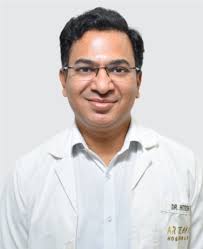
Dr. Hitesh Garg
Spine Surgery
Artemis Hospital, Gurugram
Dr. Hitesh Garg, top spine surgeon in Gurugram with 20+ years, excels in minimally invasive & robotic surgeries at Artemis Hospital.
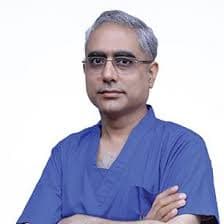
Dr. Manoj Miglani
Spine Surgery
Fortis Hospital, Vasant Kunj, New Delhi
Dr. Manoj Miglani, top spine surgeon with 26+ years, excels in minimally invasive surgeries at Fortis, Vasant Kunj.
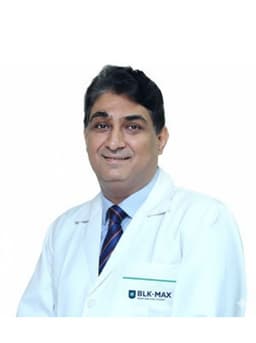
Dr. Puneet Girdhar
Spine Surgery
BLK-Max Super Speciality Hospital, New Delhi
Dr. Puneet Girdhar is a leading robotic spine surgeon in Delhi with 27+ years of experience and 15,000+ spine surgeries. Expert in minimally invasive and complex spine surgery at BLK-Max Hospital.

Dr. Ashish Dagar
Spine Surgery
Manipal Hospital Gurugram
Dr. Ashish Dagar is a fellowship-trained Orthopaedic Spine Surgeon at Manipal Hospital Gurugram with 15+ years’ experience. Specialist in minimally invasive and endoscopic spine surgery, scoliosis correction, and cervical/lumbar fusion.
Expected Outcomes & Rehabilitation
Recovery Timeline (In India & Back Home)
Your VRH case manager will arrange your 'Fit-to-Fly' certificate prior to your departure.
How Quickly Can I Travel?
E-Opinion & Cost Estimate
24-48 hours
Received immediately after you share your MRI and X-rays with our team.
Visa Invitation Letter (VIL)
1-2 working days
Issued by the hospital to fast-track your Indian Medical Visa application.
Surgery Scheduling
No Wait List
We secure priority admission dates that match your flight availability.
Scoliosis Surgery Cost in India (Indicative Packages)
These are estimated starting ranges. Share your medical reports to receive a fixed, all-inclusive package quote tailored to your specific spinal curve.
How VRH Healthcare Helps
VRH Healthcare is not a hospital. We act as your medical facilitation and patient-navigation partner, helping you make informed decisions and move smoothly through care in India.
International Patient Services
Your Care Journey with VRH
A simplified step-by-step guide to your treatment experience.
Share medical reports (MRI/X-rays) securely with VRH Healthcare.
Receive an expert second opinion and a transparent, indicative cost estimate.
Plan your travel, medical visa, and hospital appointments with our team.
Undergo treatment in India with comprehensive on-ground coordination.
Experience smooth discharge and ongoing tele-follow-ups post-treatment.
Share medical reports (MRI/X-rays) securely with VRH Healthcare.
Receive an expert second opinion and a transparent, indicative cost estimate.
Plan your travel, medical visa, and hospital appointments with our team.
Undergo treatment in India with comprehensive on-ground coordination.
Experience smooth discharge and ongoing tele-follow-ups post-treatment.
Where We Serve: Countries We Support
Middle East
Arabic language support, visa assistance, halal meals, and coordinated care planning for spine surgery.
Africa
Support for diagnostics review, document translation, embassy liaison, and long-stay accommodation planning.
Central Asia & CIS
Russian interpretation services, airport pickup, and dedicated hospital coordination.
South Asia
Quick access to opinions, cross-border scheduling, and continuity of care.
U.K. & USA
Comparative estimates for FDA-approved spine implants and post-return tele-follow-ups.
Other Countries
Customised support based on individual travel and care needs.