
Expert Cervical Spine Surgery in India: Your Path to Relief
Navigate advanced neck spine treatment with VRH Healthcare, connecting you to leading specialists and world-class facilities for comprehensive care.
Verified Hospitals
JCI & NABH Accredited Centres only.
Zero Wait Time
Priority appointments for international patients.
Understanding Cervical Spine Surgery in India
Cervical spine surgery encompasses various surgical procedures performed on the neck (cervical) region of the spine. It is typically recommended when non-surgical treatments fail to alleviate severe symptoms caused by conditions affecting the spinal cord or nerve roots. Common indications include cervical disc herniation, spinal stenosis, cervical myelopathy, or instability resulting from degenerative changes or trauma. The primary objectives are to relieve pressure on neural structures, stabilise the spine, reduce pain, and restore neurological function. In India, highly experienced spine surgeons utilise advanced techniques to achieve optimal patient outcomes, significantly improving quality of life for international patients seeking specialised care.
Types / Variants of Cervical Spine Surgery
Anterior Cervical Discectomy and Fusion (ACDF)
Removes damaged disc from the front, fusing vertebrae for stability.
Anterior Cervical Disc Replacement (ACDR)
Replaces damaged disc with an artificial one, preserving motion.
Posterior Cervical Laminectomy/Laminoplasty
Removes or reshapes bone from the back to decompress spinal cord.
Posterior Cervical Foraminotomy
Enlarges nerve root opening from the back to relieve nerve compression.
Cervical Corpectomy
Removes a vertebral body and adjacent discs, often for multi-level compression.
Your surgeon explains why a particular approach is recommended for you.
Technology & Techniques
In India, Cervical Spine Surgery may be performed using:
Benefits
- Significant reduction in chronic neck and arm pain, enhancing daily comfort.
- Restoration of neurological function, alleviating numbness, tingling, and weakness.
- Stabilisation of the cervical spine, preventing further damage and deformity.
- Improved range of motion and flexibility in the neck for certain procedures.
- Enhanced overall quality of life, allowing return to work and leisure activities.
- Prevention of progressive neurological deficits, preserving long-term health.
- Correction of spinal deformities, improving posture and spinal alignment.
- Reduced reliance on long-term pain medication and conservative therapies.
Limitations
- Requires a significant recovery period, impacting daily activities temporarily.
- Potential for surgical complications like infection, bleeding, or nerve damage.
- Fusion procedures may lead to reduced neck mobility and adjacent segment disease.
- Not all pre-existing symptoms may fully resolve, especially long-standing issues.
- Anaesthesia risks are present, as with any major surgical intervention.
- Rehabilitation commitment is crucial for optimal long-term outcomes.
- Risk of implant-related issues, though rare with modern materials.
- Success varies based on the underlying condition and patient's overall health.
Diagnostics & Pre-Arrival Work-Up
Pre-Arrival & Travel Checklist
How the Procedure is Done (Step-by-Step)
Pre-operative Assessment
Comprehensive evaluation, including imaging review, blood tests, and anaesthesia fitness assessment by the medical team.
Anaesthesia Administration
General anaesthesia is given to ensure the patient is unconscious and pain-free throughout the entire surgical procedure.
Surgical Incision
An incision is carefully made, either at the front (anterior) or back (posterior) of the neck, based on the chosen surgical approach.
Decompression
The surgeon meticulously removes bone spurs, herniated disc material, or thickened ligaments causing nerve compression.
Stabilisation/Fusion/Replacement
Vertebrae may be fused with bone grafts and plates/screws, or an artificial disc may be implanted to restore stability.
Wound Closure
The surgical site is meticulously closed in layers, and a sterile dressing is applied to protect the incision.
Post-operative Monitoring
Patients are moved to recovery for close observation as they wake from anaesthesia, with pain management initiated.
Top Specialists for Spine Surgery
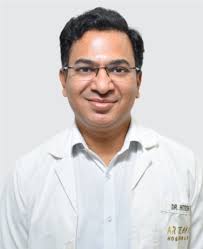
Dr. Hitesh Garg
Spine Surgery
Artemis Hospital, Gurugram
Dr. Hitesh Garg, top spine surgeon in Gurugram with 20+ years, excels in minimally invasive & robotic surgeries at Artemis Hospital.
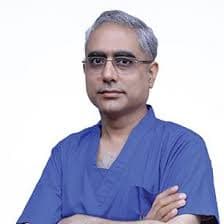
Dr. Manoj Miglani
Spine Surgery
Fortis Hospital, Vasant Kunj, New Delhi
Dr. Manoj Miglani, top spine surgeon with 26+ years, excels in minimally invasive surgeries at Fortis, Vasant Kunj.
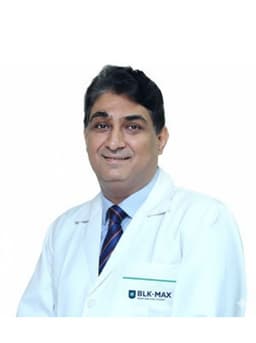
Dr. Puneet Girdhar
Spine Surgery
BLK-Max Super Speciality Hospital, New Delhi
Dr. Puneet Girdhar is a leading robotic spine surgeon in Delhi with 27+ years of experience and 15,000+ spine surgeries. Expert in minimally invasive and complex spine surgery at BLK-Max Hospital.

Dr. Ashish Dagar
Spine Surgery
Manipal Hospital Gurugram
Dr. Ashish Dagar is a fellowship-trained Orthopaedic Spine Surgeon at Manipal Hospital Gurugram with 15+ years’ experience. Specialist in minimally invasive and endoscopic spine surgery, scoliosis correction, and cervical/lumbar fusion.
Expected Outcomes & What Success Means
Recovery & Follow-Up Timeline
Fitness to fly and activity limits are centre-specific.
How Quickly Can I Start?
Second Opinion
12–48 hours
Typically received after sharing medical reports.
Scheduling
Variable
Depends on hospital availability and clinical priority.
Costs & What Affects Your Estimate
This page provides an overview of typical costs and influencing factors. A personalised cost estimate is shared after a medical review of your reports—please contact us to request your individual estimate.
How VRH Healthcare Helps
VRH Healthcare is not a hospital. We act as your medical facilitation and patient-navigation partner, helping you make informed decisions and move smoothly through care in India.
International Patient Services
Your Care Journey with VRH
A simplified step-by-step guide to your treatment experience.
Share medical reports
Receive an expert second opinion and indicative estimate
Plan travel, visa, and appointments
Treatment with on-ground coordination
Discharge and ongoing tele-follow-ups
Share medical reports
Receive an expert second opinion and indicative estimate
Plan travel, visa, and appointments
Treatment with on-ground coordination
Discharge and ongoing tele-follow-ups
Where We Serve: Countries We Support
Middle East
Language support, visa assistance, and coordinated care planning for cervical spine surgery.
Africa
Support for diagnostics review, travel planning, and post-treatment follow-up.
Central Asia & CIS
Interpretation services and hospital coordination for surgical care.
South Asia
Quick access to opinions, scheduling, and continuity of care.
U.K. & USA
Second opinions, cost-sensitive planning, and post-return tele-follow-ups.
Other Countries
Customised support based on individual travel and care needs.