
Transcatheter Aortic Valve Implantation (TAVI) in India
Expert, minimally invasive aortic valve replacement for high-risk patients, coordinated by VRH Healthcare.
Verified Hospitals
JCI & NABH Accredited Centres only.
Zero Wait Time
Priority appointments for international patients.
Understanding Transcatheter Aortic Valve Implantation (TAVI) in India
Transcatheter Aortic Valve Implantation (TAVI), also known as Transcatheter Aortic Valve Replacement (TAVR), is a minimally invasive procedure to replace a diseased aortic valve. It is primarily offered to patients with severe aortic stenosis who are considered high-risk for traditional open-heart surgery. Instead of a large incision, a new artificial valve is delivered to the heart via a catheter, typically inserted through an artery in the leg. This advanced cardiology procedure aims to restore proper blood flow from the heart, significantly improving symptoms and quality of life for suitable candidates.
Types / Variants of Transcatheter Aortic Valve Implantation (TAVI)
Transfemoral Approach
The most common method, where the catheter is inserted through an artery in the groin.
Transapical Approach
Involves a small incision in the chest, with the catheter inserted directly into the heart's apex.
Transaortic Approach
A small incision in the upper chest allows direct access to the aorta for catheter insertion.
Subclavian/Axillary Approach
The catheter is inserted through an artery in the shoulder or arm, an alternative access site.
Your surgeon explains why a particular approach is recommended for you.
Technology & Techniques
In India, Transcatheter Aortic Valve Implantation (TAVI) may be performed using:
Benefits
- Minimally invasive, avoiding open-heart surgery.
- Faster recovery times and shorter hospital stays compared to traditional surgery.
- Reduced pain and scarring.
- Suitable for elderly patients or those with multiple co-morbidities.
- Significant improvement in symptoms of aortic stenosis.
- Potential for enhanced quality of life post-procedure.
Limitations
- Not suitable for all patients; careful selection is crucial.
- Potential for vascular complications at the access site.
- Risk of paravalvular leak (blood leaking around the new valve).
- Higher incidence of new pacemaker implantation compared to surgical AVR.
- Long-term durability data is still evolving compared to surgical valve replacement.
- Requires highly specialised cardiac teams and infrastructure.
Diagnostics & Pre-Arrival Work-Up
Pre-Arrival & Travel Checklist
How the Procedure is Done (Step-by-Step)
Patient Preparation
The patient receives local anaesthesia with sedation or general anaesthesia. The access site, typically the groin, is sterilised and prepared.
Catheter Insertion & Guidance
A small incision is made, and a catheter is inserted into an artery (usually femoral). It is then carefully guided to the heart under imaging guidance.
Valve Delivery
The new artificial valve, compressed onto the catheter, is advanced through the aorta to the site of the diseased aortic valve.
Valve Deployment
Once precisely positioned, the new valve is deployed. It expands, pushing aside the old valve leaflets and taking over their function.
Assessment & Closure
The new valve's function is immediately assessed using imaging. The catheter is then removed, and the access site is closed.
Top Specialists for Cardiology

Dr. Naresh Trehan
Cardiology
Medanta - The Medicity, Gurugram
Dr. Naresh Trehan, with 56+ years of experience, is a world-renowned heart surgeon known for heart transplants and robotic heart surgery at Medanta, Gurugram.
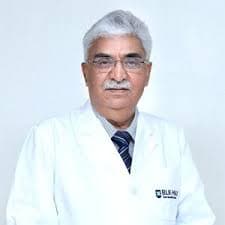
Dr. T. S. Kler
Cardiology
BLK-Max Super Speciality Hospital, New Delhi
Dr. T. S. Kler, with 37+ years of experience, is a pioneer in interventional cardiology and electrophysiology, known for performing over 35,000 angioplasties and ethical cardiac care.
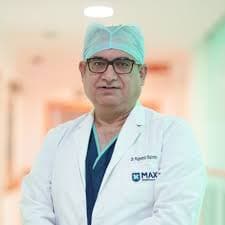
Dr. Rajneesh Malhotra
Cardiology
Max Super Speciality Hospital, Saket, New Delhi
Dr. Rajneesh Malhotra, top Delhi cardiac surgeon with 33+ years, excels in heart transplants & robotic surgery at Max Hospital, Saket.
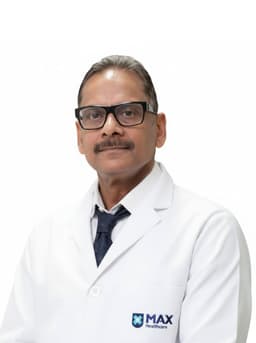
Dr. B.L. Agarwal
Cardiology
Max Super Speciality Hospital, Noida
Dr. B.L. Agarwal, with 30+ years of experience, specializes in angioplasty, stenting, and heart failure treatment. Known for ethical care and expertise in interventional cardiology.
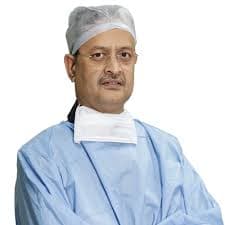
Dr. S. S. Bansal
Cardiology
SSB Heart & Multispecialty Hospital, Faridabad
Dr. S. S. Bansal, top Faridabad cardiologist with 30+ years, excels in angioplasty, stenting, and advanced heart disease care at SSB Hospital.
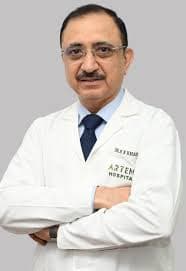
Dr. Surendra Nath Khanna
Cardiology
Artemis Hospital, Gurugram
Dr. Surendra Nath Khanna, Chairperson of Cardiac Surgery at Artemis Hospital Gurgaon. 34+ years experience, 21,000+ heart surgeries. Expert in valve repair & CABG.
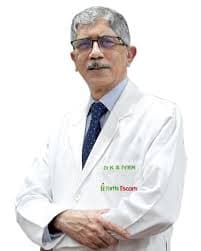
Dr. Krishna Subramony Iyer
Cardiology
Fortis Escorts Heart Institute, New Delhi
Dr. Krishna Subramony Iyer is a pioneer in paediatric cardiac surgery with 45+ years’ experience and 14,000+ congenital heart surgeries at Fortis Escorts, Delhi.
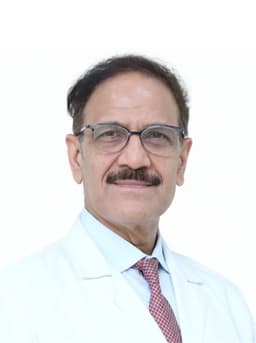
Dr. Subhash Chandra
Cardiology
BLK-Max Super Speciality Hospital, New Delhi
Dr. Subhash Chandra is a senior interventional cardiologist in Delhi with 40+ years of experience. Expert in TAVI, angioplasty, pacemakers, and structural heart disease.
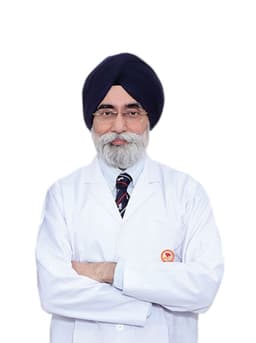
Dr. (Brig) Sudeep Singh Sidhu
Cardiology
SSB Heart & Multispecialty Hospital, Faridabad
Dr (Brig) Sudeep Singh Sidhu is Head & Chief Cardiac Surgeon at SSB Hospital Faridabad with 30+ years’ experience in off-pump CABG, total arterial revascularization, redo bypass, aortic and vascular surgery.

Dr Shiv Kumar Choudhary
Cardiology
Fortis Escorts Heart Institute, New Delhi
Dr Shiv Kumar Choudhary is Executive Director CTVS at Fortis Escorts Heart Institute, New Delhi with 32+ years’ experience in complex aortic, valve, transplant and cardiac surgery.
Expected Outcomes & What Success Means
Recovery & Follow-Up Timeline
Fitness to fly and activity limits are centre-specific.
How Quickly Can I Start?
Second Opinion
12-48 hours
Typically received after sharing medical reports.
Medical Visa & Travel Planning
1-3 weeks
Processing time for visa invitation letters and travel arrangements.
Hospital Admission & Pre-Op
1-2 days post-arrival
For final diagnostics, consultations, and procedure preparation.
Procedure Scheduling
Variable
Depends on hospital availability, clinical priority, and patient readiness.
Costs & What Affects Your Estimate
This page provides an overview of typical costs and influencing factors. A personalised cost estimate is shared after a medical review of your reports—please contact us to request your individual estimate.
How VRH Healthcare Helps
VRH Healthcare is not a hospital. We act as your medical facilitation and patient-navigation partner, helping you make informed decisions and move smoothly through care in India.
International Patient Services
Your Care Journey with VRH
A simplified step-by-step guide to your treatment experience.
Share medical reports for expert review
Receive an expert second opinion and indicative estimate
Plan travel, visa, and appointments with our assistance
Undergo treatment in India with dedicated on-ground coordination
Experience smooth discharge and ongoing tele-follow-ups
Share medical reports for expert review
Receive an expert second opinion and indicative estimate
Plan travel, visa, and appointments with our assistance
Undergo treatment in India with dedicated on-ground coordination
Experience smooth discharge and ongoing tele-follow-ups
Where We Serve: Countries We Support
Middle East
Language support, visa assistance, and coordinated care planning for TAVI.
Africa
Support for diagnostics review, travel planning, and post-treatment follow-up.
Central Asia & CIS
Interpretation services and hospital coordination for surgical care.
South Asia
Quick access to opinions, scheduling, and continuity of care.
U.K. & USA
Second opinions, cost-sensitive planning, and post-return tele-follow-ups.
Other Countries
Customised support based on individual travel and care needs.