
Urgent Thrombolytic Therapy in India: Rapid Clot Dissolution for Heart Attack & Stroke
Access timely, expert emergency cardiology and neurology care. VRH Healthcare connects international patients with leading hospitals for critical, time-sensitive treatment and follow-up care in India.
Verified Hospitals
JCI & NABH Accredited Centres only.
Zero Wait Time
Priority appointments for international patients.
Understanding Thrombolytic Therapy in India
Thrombolytic therapy, commonly known as clot-busting treatment, is a life-saving emergency procedure used to dissolve blood clots that block critical arteries. It is primarily used in acute conditions such as heart attack (acute myocardial infarction) and ischemic stroke, where rapid restoration of blood flow is essential to prevent permanent organ damage. This therapy uses specialised medications to break down clots and restore circulation to the heart or brain. In India, advanced cardiac and stroke centres follow strict emergency protocols for rapid and effective treatment. For international patients, initial emergency care is typically provided locally, after which VRH Healthcare supports advanced treatment, recovery, and follow-up care in India.
Types / Variants of Thrombolytic Therapy
Systemic Thrombolysis
Medication administered intravenously to dissolve clots throughout the body's circulatory system.
Catheter-Directed Thrombolysis
Clot-dissolving drugs delivered directly to the clot site via a thin, flexible catheter.
Pharmacomechanical Thrombolysis
Combines catheter-directed drug delivery with mechanical clot removal techniques for enhanced efficacy.
Intra-arterial Thrombolysis
Direct delivery of thrombolytic agents into the affected artery, often used for acute stroke.
Your surgeon explains why a particular approach is recommended for you.
Technology & Techniques
In India, Thrombolytic Therapy is a critical emergency procedure, often performed using a combination of advanced medical technologies and established protocols. These ensure rapid diagnosis, precise drug delivery, and continuous patient monitoring. Key technologies and techniques include:
Benefits
- Rapid restoration of blood flow to the heart muscle or brain, crucial in emergencies.
- Significantly reduces the extent of tissue damage caused by heart attacks and strokes.
- Can improve patient survival rates and functional outcomes in acute cardiac and neurological events.
- Minimally invasive compared to surgical clot removal, avoiding large incisions.
- Widely available in well-equipped emergency and critical care centres across India.
- Can be administered quickly, especially important when catheterisation labs are not immediately accessible.
Limitations
- Significant risk of serious bleeding, including potentially life-threatening intracranial haemorrhage.
- Not suitable for all patients, particularly those with a high risk of bleeding or recent surgery.
- Strict time window for optimal effectiveness, typically within hours of symptom onset.
- Potential for re-occlusion (clot reforming) or incomplete dissolution of the existing clot.
- Requires immediate, expert medical assessment and specialised facilities for safe administration and monitoring.
- May not be as effective as mechanical clot removal in certain large vessel occlusions.
Diagnostics & Pre-Arrival Work-Up
Pre-Arrival & Travel Checklist
How the Procedure is Done (Step-by-Step)
Emergency Assessment & Diagnosis
Upon arrival, a rapid medical evaluation, including history, physical exam, ECG, and blood tests, confirms heart attack or stroke.
Exclusion of Contraindications
Doctors quickly assess for any conditions like active bleeding or recent surgery that would make thrombolysis unsafe.
Medication Administration
If suitable, thrombolytic drugs (e.g., Alteplase) are administered, typically intravenously, to dissolve the clot.
Continuous Monitoring
Patients are closely observed in an Intensive Care Unit (ICU) for vital signs, bleeding, and treatment effectiveness.
Post-Thrombolysis Management
After clot dissolution, further care may involve antiplatelet drugs, anticoagulants, or other interventions like angioplasty.
Top Specialists for Cardiology

Dr. Naresh Trehan
Cardiology
Medanta - The Medicity, Gurugram
Dr. Naresh Trehan, with 56+ years of experience, is a world-renowned heart surgeon known for heart transplants and robotic heart surgery at Medanta, Gurugram.
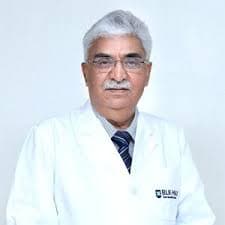
Dr. T. S. Kler
Cardiology
BLK-Max Super Speciality Hospital, New Delhi
Dr. T. S. Kler, with 37+ years of experience, is a pioneer in interventional cardiology and electrophysiology, known for performing over 35,000 angioplasties and ethical cardiac care.
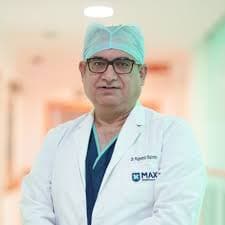
Dr. Rajneesh Malhotra
Cardiology
Max Super Speciality Hospital, Saket, New Delhi
Dr. Rajneesh Malhotra, top Delhi cardiac surgeon with 33+ years, excels in heart transplants & robotic surgery at Max Hospital, Saket.
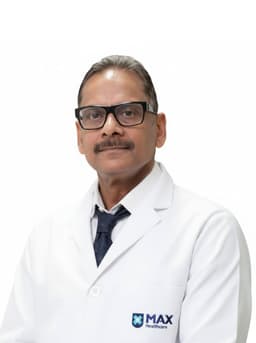
Dr. B.L. Agarwal
Cardiology
Max Super Speciality Hospital, Noida
Dr. B.L. Agarwal, with 30+ years of experience, specializes in angioplasty, stenting, and heart failure treatment. Known for ethical care and expertise in interventional cardiology.
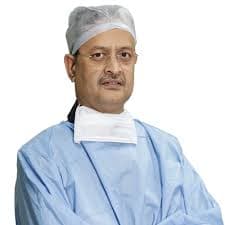
Dr. S. S. Bansal
Cardiology
SSB Heart & Multispecialty Hospital, Faridabad
Dr. S. S. Bansal, top Faridabad cardiologist with 30+ years, excels in angioplasty, stenting, and advanced heart disease care at SSB Hospital.
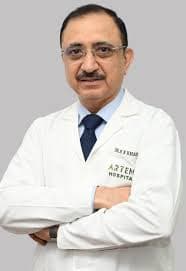
Dr. Surendra Nath Khanna
Cardiology
Artemis Hospital, Gurugram
Dr. Surendra Nath Khanna, Chairperson of Cardiac Surgery at Artemis Hospital Gurgaon. 34+ years experience, 21,000+ heart surgeries. Expert in valve repair & CABG.
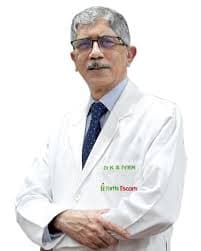
Dr. Krishna Subramony Iyer
Cardiology
Fortis Escorts Heart Institute, New Delhi
Dr. Krishna Subramony Iyer is a pioneer in paediatric cardiac surgery with 45+ years’ experience and 14,000+ congenital heart surgeries at Fortis Escorts, Delhi.
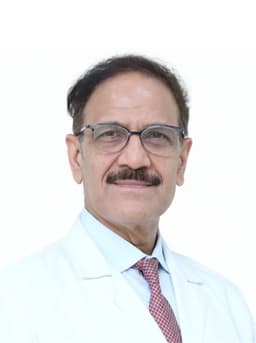
Dr. Subhash Chandra
Cardiology
BLK-Max Super Speciality Hospital, New Delhi
Dr. Subhash Chandra is a senior interventional cardiologist in Delhi with 40+ years of experience. Expert in TAVI, angioplasty, pacemakers, and structural heart disease.
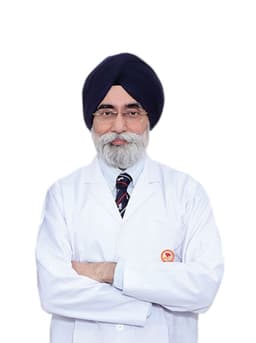
Dr. (Brig) Sudeep Singh Sidhu
Cardiology
SSB Heart & Multispecialty Hospital, Faridabad
Dr (Brig) Sudeep Singh Sidhu is Head & Chief Cardiac Surgeon at SSB Hospital Faridabad with 30+ years’ experience in off-pump CABG, total arterial revascularization, redo bypass, aortic and vascular surgery.
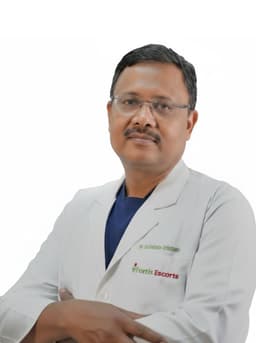
Dr Shiv Kumar Choudhary
Cardiology
Fortis Escorts Heart Institute, New Delhi
Dr Shiv Kumar Choudhary is Executive Director CTVS at Fortis Escorts Heart Institute, New Delhi with 32+ years’ experience in complex aortic, valve, transplant and cardiac surgery.

Dr. Aparna Jaswal
Cardiology
Fortis Escorts Heart Institute, New Delhi
Dr. Aparna Jaswal is a leading cardiac electrophysiologist with 30+ years of experience. Expert in catheter ablation, ICD implantation, CRT, and complex arrhythmia treatment at Fortis Escorts Heart Institute, New Delhi.
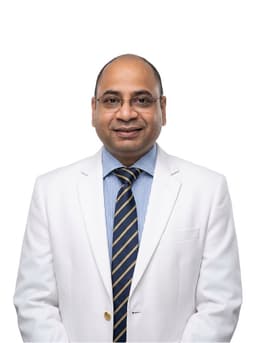
Dr. Aseem R. Srivastava
Cardiology
Artemis Hospital, Gurugram
Dr Aseem R. Srivastava is a US-trained pediatric cardiac surgeon at Artemis Hospital, Gurgaon with 20+ years' experience in congenital heart surgery.
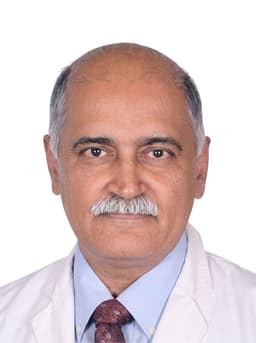
Dr Kulbhushan Singh Dagar
Cardiology
Max Super Speciality Hospital, Saket, New Delhi
Dr Kulbhushan Singh Dagar is Chairman of Neonatal & Congenital Heart Surgery at Max Saket with 32+ years' experience in pediatric heart surgery.
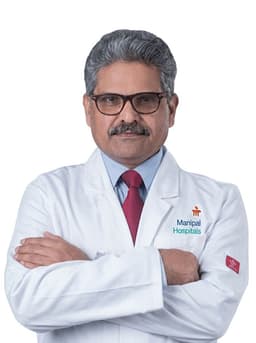
Dr. Yugal Kishor Mishra
Cardiology
Manipal Hospitals Dwarka, New Delhi
Dr. Yugal Kishor Mishra is Chairman of Cardiac Sciences at Manipal Dwarka with 30+ years’ experience and 19,000+ cardiac surgeries.
Expected Outcomes & What Success Means
Recovery & Follow-Up Timeline
Fitness to fly and activity limits are centre-specific.
How Quickly Can I Start?
Second Opinion
12–48 hours
Typically received after sharing comprehensive medical reports, allowing for rapid assessment of your emergency.
Scheduling & Travel
Variable (Urgent)
Depends on hospital availability and the critical clinical priority of your condition. VRH expedites all arrangements.
Treatment Initiation
Immediately upon arrival
Once in India and assessed, thrombolytic therapy is initiated as quickly as medically indicated, given its time-sensitive nature.
Costs & What Affects Your Estimate
This page provides an overview of typical costs and influencing factors. A personalised cost estimate is shared after a medical review of your reports—please contact us to request your individual estimate.
How VRH Healthcare Helps
VRH Healthcare is not a hospital. We act as your medical facilitation and patient-navigation partner, helping you make informed decisions and move smoothly through care in India. For critical, time-sensitive treatments like thrombolytic therapy, our role is to expedite access to the best emergency care.
International Patient Services
Your Care Journey with VRH
A simplified step-by-step guide to your treatment experience, designed for clarity and efficiency, especially in urgent situations.
Share medical reports: Submit your diagnostic reports for a rapid, expert review.
Receive an expert second opinion and indicative estimate: Get clarity on treatment options and costs.
Plan travel, visa, and appointments: VRH assists with urgent visa letters and hospital scheduling.
Treatment with on-ground coordination: Receive care in India with our continuous support and assistance.
Discharge and ongoing tele-follow-ups: Return home with a care plan and virtual follow-up appointments.
Share medical reports: Submit your diagnostic reports for a rapid, expert review.
Receive an expert second opinion and indicative estimate: Get clarity on treatment options and costs.
Plan travel, visa, and appointments: VRH assists with urgent visa letters and hospital scheduling.
Treatment with on-ground coordination: Receive care in India with our continuous support and assistance.
Discharge and ongoing tele-follow-ups: Return home with a care plan and virtual follow-up appointments.
Where We Serve: Countries We Support
Middle East
Language support, visa assistance, and coordinated care planning for critical cardiac and neurological emergencies.
Africa
Support for urgent diagnostics review, rapid travel planning, and post-treatment follow-up for time-sensitive conditions.
Central Asia & CIS
Interpretation services and expedited hospital coordination for emergency medical care.
South Asia
Quick access to opinions, urgent scheduling, and seamless continuity of care for critical patients.
U.K. & USA
Second opinions, cost-sensitive planning for emergency treatments, and post-return tele-follow-ups.
Other Countries
Customised support based on individual travel and urgent care needs, ensuring comprehensive assistance.