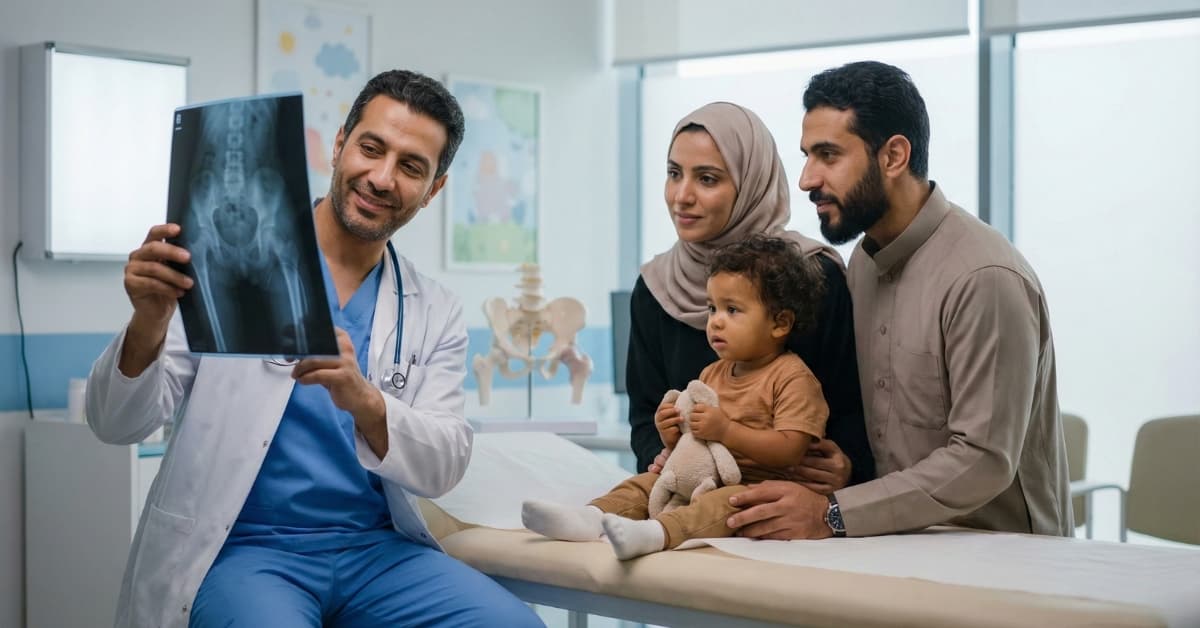
Pediatric Hip Dysplasia Surgery in India: A Comprehensive Guide for International Families – 2026
Navigating a child's medical journey, especially abroad, can be daunting. For international families seeking world-class care for Pediatric Hip Dysplasia, India has emerged as a beacon of hope. Renowned for its advanced medical infrastructure, highly skilled pediatric orthopedic surgeons, and compassionate patient care, India offers a holistic solution. This guide aims to demystify the process, providing empathetic and authoritative insights into treatment options, costs, and the extensive support available, ensuring peace of mind for parents considering this crucial step for their child's future.
What is Pediatric Hip Dysplasia?
Pediatric Hip Dysplasia, often referred to as Developmental Dysplasia of the Hip (DDH), is a condition where the hip joint hasn't formed properly. In a healthy hip, the top of the thigh bone (femoral head) fits snugly into the hip socket (acetabulum). With DDH, this socket is too shallow, or the femoral head is not securely in place, leading to instability. If left untreated, DDH can cause pain, limping, early arthritis, and significant mobility issues as the child grows. Early diagnosis, often through newborn screenings and ultrasound, is crucial for the best outcomes, allowing for less invasive treatments. However, for cases diagnosed later or those unresponsive to conservative methods, surgical intervention becomes a vital pathway to restoring normal hip function and ensuring a healthy, active childhood.
Understanding Pediatric Hip Dysplasia Surgery Options
The choice of surgical procedure for Pediatric Hip Dysplasia depends heavily on the child's age, the severity of the dysplasia, and whether previous non-surgical treatments have been attempted. Indian hospitals, particularly in Delhi NCR, offer a full spectrum of advanced surgical techniques tailored to each child's unique needs.
Closed Reduction with Spica Cast
This procedure is typically performed on infants between 6 months and 18 months of age when the hip is dislocated but can be gently manipulated back into the socket without an incision. The child is placed under general anesthesia, and the surgeon carefully repositions the femoral head. A spica cast is then applied to hold the hip in the correct position for several months, allowing the joint to stabilize and develop properly.
- Minimally invasive approach, no incision required.[cite: 1]
- Suitable for infants with reducible dislocations.[cite: 1]
- High success rates (often >90%) when performed early.[cite: 1]
Open Reduction
When a closed reduction is not possible (e.g., due to soft tissue obstructions or for older children, typically 18 months to 3 years), an open reduction is performed. This involves a surgical incision to directly visualize the hip joint, remove any obstructing tissues, and precisely place the femoral head back into the acetabulum. The joint is then stabilized, often with a spica cast.
- Direct visualization allows for precise correction.[cite: 1]
- Effective for irreducible dislocations or older toddlers.[cite: 1]
- Addresses soft tissue impediments to reduction.[cite: 1]
Pelvic Osteotomy (e.g., Salter, Dega, Pemberton)
For older children (typically 3 years and above) or those with residual dysplasia after earlier treatments, the hip socket itself may need reshaping. A pelvic osteotomy involves cutting and repositioning parts of the pelvic bone to create a deeper, more encompassing socket for the femoral head. This procedure aims to improve hip stability and prevent future complications like arthritis.
- Corrects bony deformities of the acetabulum.[cite: 1]
- Crucial for long-term hip health in older children.[cite: 1]
- Customized approach based on specific deformity.[cite: 1]
Why Choose Delhi NCR for Pediatric Hip Dysplasia Surgery?
Delhi NCR has emerged as a premier destination for pediatric orthopedic care, attracting international families due to its unique blend of expertise, infrastructure, and patient-centric services. The region boasts a concentration of highly specialized pediatric orthopedic surgeons with extensive experience in treating complex hip conditions in children. Hospitals here are equipped with dedicated pediatric units, state-of-the-art diagnostic tools, and child-friendly environments designed to minimize anxiety for young patients and their families. Furthermore, the collaborative approach among specialists ensures comprehensive care, from diagnosis to rehabilitation, making Delhi NCR a trusted choice for such delicate procedures.
The Surgical Journey: What to Expect
Embarking on a surgical journey for your child can be overwhelming, but understanding each step can bring immense comfort. In Delhi NCR, the process is meticulously planned to ensure safety, comfort, and the best possible outcome for your child. It begins with a thorough pre-operative evaluation, including detailed imaging (X-rays, ultrasound, MRI) and consultations with the orthopedic surgeon, anesthesiologist, and pediatrician. On the day of surgery, your child will be prepared by a compassionate nursing team. Post-surgery, your child will be closely monitored in a recovery area, with pain management being a top priority. The hospital stay typically ranges from a few days to a week, depending on the procedure, during which parents receive comprehensive guidance on post-operative care, including cast management and early mobilization techniques.
Advanced Technology and Techniques in Delhi NCR
Indian hospitals, particularly those specializing in pediatric orthopedics in Delhi NCR, leverage cutting-edge technology to enhance the precision and safety of hip dysplasia surgeries. Medical centers like BLK-Max Super Speciality Hospital, New Delhi provide advanced 3D imaging and modeling for pre-surgical planning, allowing surgeons to visualize the hip joint in intricate detail and plan the most effective approach. Intraoperative fluoroscopy provides real-time imaging during the procedure, ensuring accurate reduction and fixation. While robotic assistance is less common for primary DDH surgeries, the emphasis is on minimally invasive techniques where appropriate, and the use of specialized instruments designed for pediatric anatomy, leading to smaller incisions, reduced blood loss, and faster recovery times. These technological advancements contribute significantly to the high success rates and improved long-term outcomes for children.
Cost of Pediatric Hip Dysplasia Surgery in India
One of the most compelling reasons international families choose India for medical care is the significant cost advantage without compromising on quality. The cost of Pediatric Hip Dysplasia surgery in Delhi NCR is substantially lower than in many Western countries, making world-class treatment accessible.
| Procedure Type | Cost in India (INR) | Cost in India (USD) | Cost in US (USD) | Cost in UK (GBP) |
|---|---|---|---|---|
| Closed Reduction with Spica Cast | ₹1,50,000 - ₹3,00,000 | $1,800 - $3,600 | $15,000 - $25,000 | £10,000 - £18,000 |
| Open Reduction with Spica Cast | ₹2,50,000 - ₹5,00,000 | $3,000 - $6,000 | $25,000 - $40,000 | £18,000 - £30,000 |
| Pelvic Osteotomy | ₹4,00,000 - ₹8,00,000 | $4,800 - $9,600 | $40,000 - $70,000 | £30,000 - £50,000 |
Disclaimer: These are estimated ranges. Actual costs may vary significantly based on the specific hospital, surgeon's fees, complexity of the case, duration of hospital stay, type of implants used, and post-operative care requirements. It is always advisable to get a personalized quote.*
Global Trust and Medical Tourism
India's reputation as a global medical tourism hub is steadily growing, with a significant influx of patients from the Middle East, Africa, Southeast Asia, and even Western countries. This trust is built on a foundation of clinical excellence, affordability, and a patient-centric approach. For pediatric hip dysplasia surgery, families are drawn to India not just for the medical expertise but also for the comprehensive support system. This includes assistance with medical visas, airport transfers, comfortable accommodation options near hospitals, and dedicated patient coordinators who facilitate communication, appointments, and cultural orientation. Many hospitals also offer in-house interpreters, ensuring that language barriers never hinder effective communication or care. The blend of high-quality medical care with robust logistical and cultural support makes India a preferred choice for international patients.
Success Rates and Clinical Outcomes
The success rates for Pediatric Hip Dysplasia surgery in India are comparable to, and often exceed, international benchmarks, thanks to highly skilled surgeons and advanced facilities. For early-diagnosed cases treated with closed reduction, success rates can be as high as 90-95%, leading to a fully functional hip. Even for more complex open reductions or osteotomies, successful outcomes, defined by a stable, pain-free hip and normal gait, are achieved in over 85-90% of cases. Long-term studies show that children who undergo successful surgery for DDH have a significantly reduced risk of developing early-onset arthritis and other complications, allowing them to lead active, healthy lives. These statistics underscore the effectiveness of the treatments offered by leading professionals like Dr. Manoj Padman in India, providing reassurance to concerned parents.
Recovery and Rehabilitation for Your Child
The journey doesn't end with surgery; recovery and rehabilitation are crucial for ensuring the best long-term outcome for your child. The recovery process is carefully managed, with a strong emphasis on gentle, age-appropriate rehabilitation.
- Hospital Stay (3-7 days): Immediate post-operative care focuses on pain management, wound care, and monitoring for any complications. Parents receive detailed instructions on cast care (if applicable) and safe handling of their child.[cite: 1]
- Spica Cast Period (6-12 weeks): If a spica cast is applied, it typically remains for several weeks to months. During this time, parents are educated on cast hygiene, feeding positions, and transportation. Regular follow-up appointments with the surgeon are scheduled to monitor hip position and cast integrity.[cite: 1]
- Cast Removal and Physiotherapy (Post-cast): Once the cast is removed, a tailored physiotherapy program begins. This focuses on restoring hip range of motion, strengthening surrounding muscles, and gradually encouraging weight-bearing and mobility. Sessions are designed to be engaging and child-friendly.[cite: 1]
- Return to Daily Activities (3-6 months post-cast removal): Most children gradually return to their normal activities, including walking, running, and playing, within 3 to 6 months after cast removal. Full recovery and unrestricted activity may take longer, depending on the child's age and the complexity of the surgery.[cite: 1]
- Long-term Follow-up: Regular follow-up appointments with the pediatric orthopedic surgeon are essential for several years to monitor hip development and ensure no recurrence or late complications.[cite: 1]
Medical Tourism Support Services by VRH Healthcare
At VRH Healthcare, we understand the unique challenges faced by international families seeking medical treatment abroad. Our mission is to provide comprehensive, empathetic support throughout your entire medical journey in India. Our dedicated team offers a seamless experience, starting from your initial inquiry:
- Visa Assistance: Guidance and support for obtaining medical visas for patients and accompanying family members.[cite: 1]
- Travel Logistics: Arranging airport transfers, local transportation, and comfortable accommodation options.[cite: 1]
- Interpreter Services: Providing professional medical interpreters to ensure clear communication between you, your child, and the medical team.[cite: 1]
- Appointment Scheduling: Coordinating all consultations, diagnostic tests, and surgical appointments.[cite: 1]
- Financial Guidance: Assisting with cost estimates, payment options, and insurance coordination.[cite: 1]
- Post-Treatment Follow-up: Facilitating telemedicine consultations and follow-up care once you return home.[cite: 1]
- Cultural Orientation: Offering insights and support to help families adapt to the local culture and environment.[cite: 1]
Quality Assurance and Standards
Indian hospitals, particularly those in Delhi NCR catering to international patients, adhere to stringent quality assurance and safety standards. Many leading institutions are accredited by international bodies like the Joint Commission International (JCI) and national bodies like the National Accreditation Board for Hospitals & Healthcare Providers (NABH). These accreditations signify adherence to global best practices in patient care, safety protocols, infection control, and ethical medical practices. Furthermore, the medical professionals, including pediatric orthopedic surgeons, anesthesiologists, and nurses, undergo rigorous training and continuous professional development, ensuring that your child receives care that is not only compassionate but also of the highest clinical caliber. This commitment to excellence provides international families with the confidence and peace of mind they need when entrusting their child's health to Indian medical institutions.
Conclusion
Choosing the right medical path for your child's Pediatric Hip Dysplasia is a decision filled with hope and concern. India, with its world-class pediatric orthopedic expertise, advanced technology, and compassionate care, stands ready to offer a solution that is both effective and accessible. Beyond the medical excellence, the comprehensive support systems available ensure that your family's journey is as smooth and stress-free as possible. Entrusting your child's future to the skilled hands in Delhi NCR means choosing a path towards a healthier, more active life.
Ready to explore the best care for your child? Contact VRH Healthcare today for a personalized consultation and begin planning your child's Pediatric Hip Dysplasia surgery in India.